


4 Reasons Why Your Pilea Is Turning Red

First of all, if you’ve landed on this page looking for red stem Pilea, sorry, that’s not what we’re talking about. Red-stem Pilea (Pilea glauca) is a beautiful (albeit not very common) addition to any houseplant collection. But in this post, we’re talking about the Pilea peperomioides and why it may sometimes turn red.
As usual, we want to reassure you that your Pilea turning red is nothing serious. Your plant is neither sick nor dying. But in some instances, you may need to adjust its care routine to help your plant grow healthy and strong.
Here are four scenarios in which your Pilea peperomioides will turn red.

1. The petiole of new leaves is red.

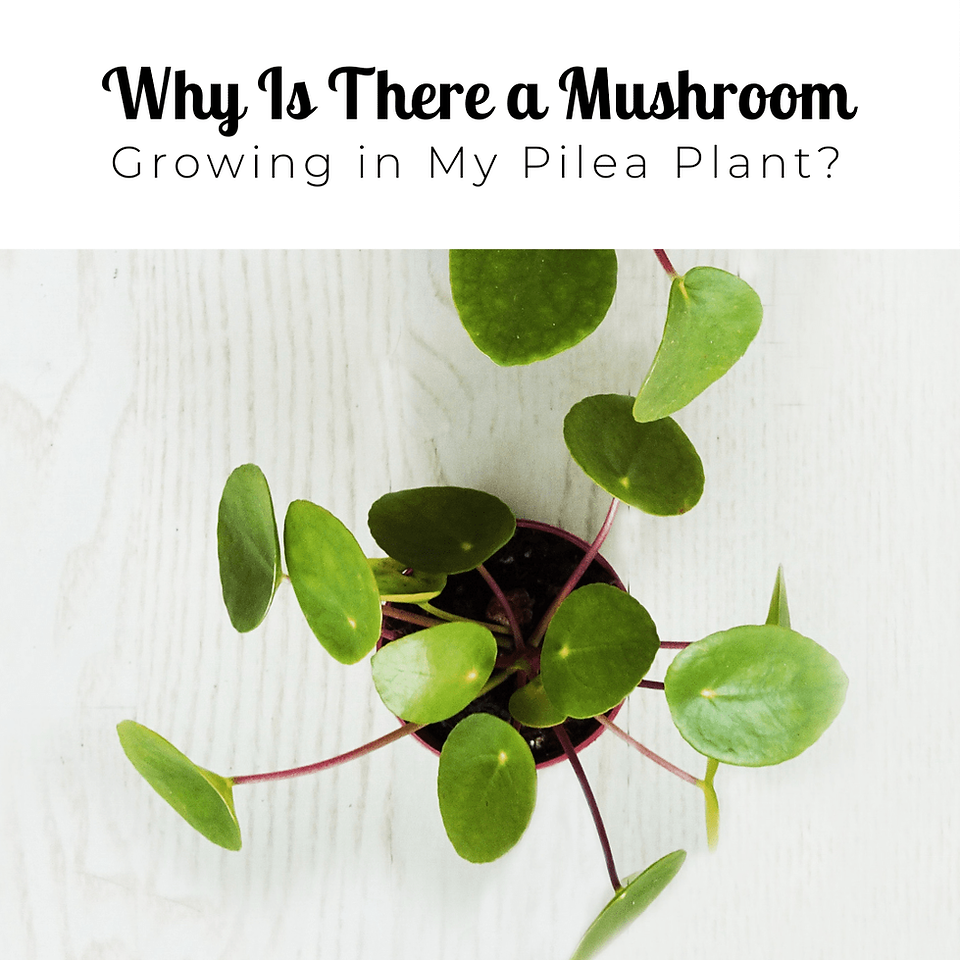
Petiole is the name of the small stick-like structure that connects the underside of a leaf with the trunk-like stem of the mother-plant. Baby leaves, the ones that grow from the top of the mature mother-plant, usually have a red petiole. This is a normal part of the growth cycle and nothing to worry about. The petiole will turn green as it matures and is exposed to sunlight.
Action step: You don’t need to take any action at this point.
2. The tip of the stem turns red.
Similar to the previous point, the tip of the stem is also new growth that first emerges in shades of dark pink and burgundy. As long as the plant has new growth, the stem will always have red hues at the tip.
Action step: You don’t need to take any action at this point.
3. The stem turns dark red or brown.
If your first Pilea encounter is with a baby plant, you might be surprised (or even alarmed) by some of the major changes that take place as the plant matures. Its leaves will get rounder and larger in diameter, it will shed lower leaves as it develops top leaves, and its stem will turn from green to reddish-brown. It’s this latter transformation that leaves some plant-owners baffled.

It’s normal for the stem of your Pilea to change color and become fibrous as your plant matures. It’s a natural process for the plant to add more cells to its stem to sustain an increase in height and weight. As older leaves fall (again, a natural process similar to how humans shed and regenerate our skin, nails and hair), the nodule where the leaf attached to the stem scabs over.
Sometimes, before this happens, the plant may also ooze some sap. You don’t have to remove the sap, as its purpose is to help the plant heal faster and keep the ‘wound’ stay clean as it heals. The sap will eventually dry out.
Action step: The taller your plant grows, the more external support it needs. At this point, you should place a stake (bamboo, plastic, metal or wood) in the pot opposite to where your Pilea is leaning towards. Gently pull your Pilea back and tie it with a piece of twine or cotton string to the stake. To ensure that your Pilea isn’t growing lopsided, you should rotate it regularly (about once every couple of weeks should be enough).
4. Your Pilea’s leaves turn red.
Unfortunately, this is not good news. Your Pilea’s leaves turn red (especially around the edge of the leaf) when your plant is stressed due to a combination of too much direct light and too little watering. You’re more likely to notice this symptom when we transition from spring to summer and the days become longer and brighter.

The plant produces red pigments called anthocyanins that function as protection against strong light damage. The pigment also helps maintain ideal water levels inside the leaf when the plant isn’t getting enough water or when the temperature and light intensity is so high that the plant loses more water than it’s replenishing.
It’s a common misconception among newbie plant-lovers that more light is always better. In the case of Pilea, bright indirect light is better. If you’re in the Northern Hemisphere, the ideal light is found in front of west-facing and east-facing windows, and a couple of feet back from south-facing windows.
Avoid placing your Pilea in a south-facing window, which usually gets the strongest and most direct light.
Action step: The first thing you should do when you notice red Pilea leaves is to move your plant away from the source of direct light. Most of the time, this change will fix the problem. However, check that your Pilea is not starved for water. This happens especially if your plant lives in a terracotta pot, which is more porous and lets the water evaporate faster. (Here’s a post on how to choose the perfect pot for your Pilea.)
To fix a thirsty Pilea, place it in your sink or bathtub and run water into the soil until the water gushes out of the drainage holes.
Your Pilea turning red is not the end of the world if the change happens on the petiole, stem or tip of the stem. However, you will need to change some of your environmental and care factors if your plant’s leaves turn red.
Keep Reading




Phew, that Pilea.com article on '4 Reasons Why Your Pilea Is Turning Red' is a lifesaver! I almost panicked seeing my new leaves' petiole turn red, but thankfully, that's normal, unlike stressed leaves from too much direct light; who knew getting light levels right needed such precision, almost like using a online protractor? Gotta check my south-facing window situation on my coffee break, ha!
We were losing customers because of wrong items shipped, missed delivery windows, and poor communication from our previous fulfillment provider. The breaking point came when a batch of orders went out with the wrong labels, and we had to reship everything at our own cost. That is when we switched to pick pack and ship services that actually prioritize accuracy and speed. They integrate with our sales channels so inventory updates in real time, and their pick-and-pack accuracy is over 99%. Returns are processed within 24 hours, and they handle custom packaging and kitting when needed. Their location near the Port of Tacoma and major highways keeps shipping times competitive. If your fulfillment provider is costing you customers, this service…
There are many conversations about whatsapp gb atualizado, especially among users interested in newer features and improvements. I think having updated information is important because older articles may not always match the current version. A useful guide should explain the basics clearly so readers can understand the topic without spending too much time searching elsewhere.
I found this article easy to read and surprisingly informative. The writer has managed to explain the subject in a way that does not require much background knowledge. The practical details are helpful, and the overall organization makes the information easy to remember. I also liked the balanced tone because it keeps the article focused on information. Anyone trying to understand the basics and important aspects of this topic should find it useful.
https://tashanwins.games/